Artificial intelligence is transforming almost every aspect of human life at a pace unprecedented in history — from medical diagnostics and information processing to fundamental ethical questions about autonomy, responsibility and the future of human decision-making.
Opportunities, limitations & responsibility.
Four evenings, four perspectives: What does AI mean for our society, our health and our everyday lives — and what infrastructure underpins it all? This joint lecture series organised by the Braunschweig Scientific Society (BWG) and the Lower Saxony Academy of Sciences in Göttingen (NAWG) brings leading scientists to phaeno — for insightful perspectives, open questions and genuine dialogue.
3 September 2026: ETHICAL CONSIDERATIONS with Prof. Catrin Misselhorn (Lower Saxony Academy)
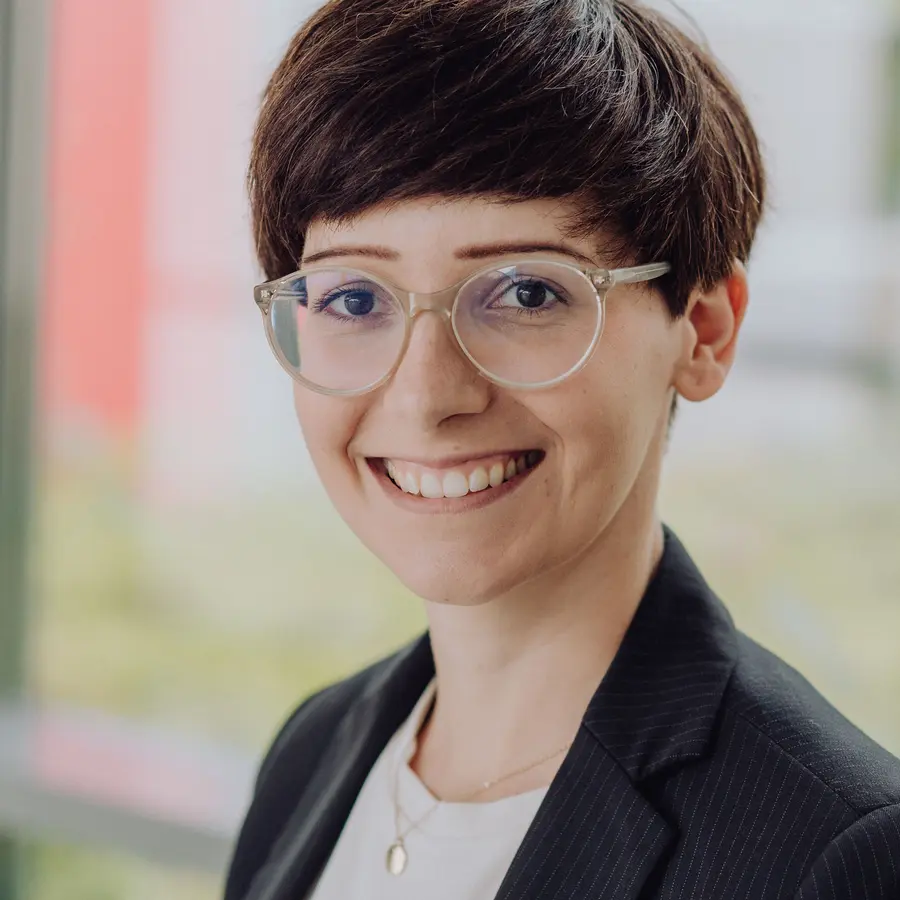
10 September 2026: AI IN DAILY INFORMATION GATHERING with Dr Esther Greussing (Young BWG)
17 September 2026: AI IN MEDICINE with Prof. Michael Maschollek (BWG)
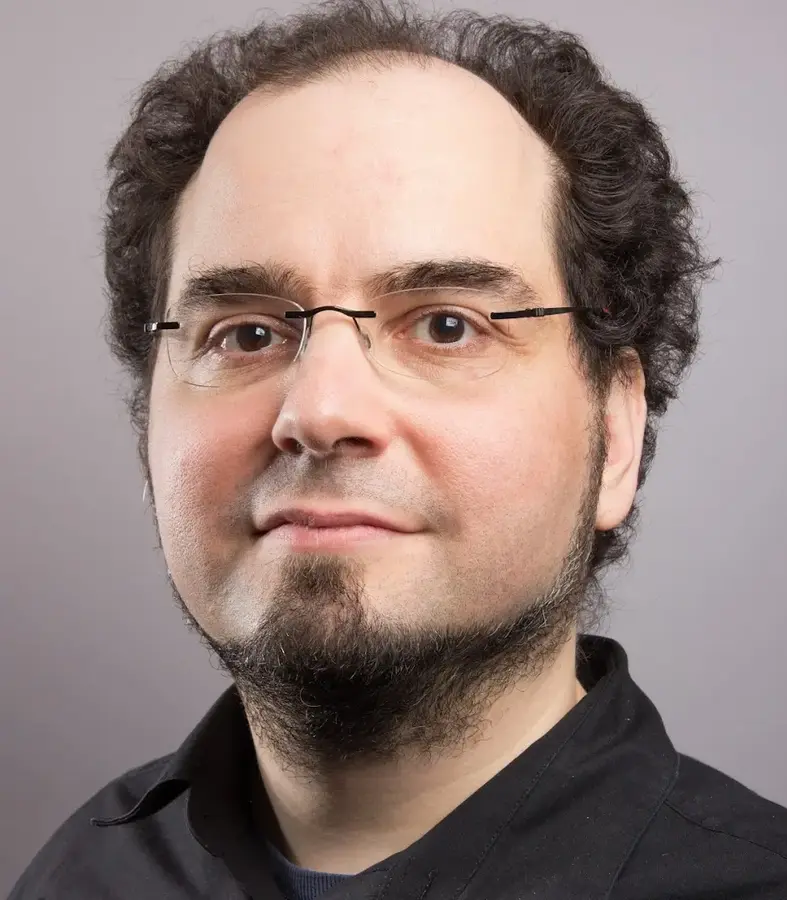
1 October 2026: NECESSARY INFRASTRUCTURE AND FUTURE DEVELOPMENTS with Prof. Julian Kunkel (University of Göttingen)
Join us:
6.30 pm | Doors open at 6.15 pm
at the phaeno Science Theatre
Admission to the lectures is free
Ethical considerations
3 September 2026 | 6.30 pm
I’m your partner! Friendship, love and sex with robots
Artificial intelligence is increasingly making inroads into areas that previously seemed to be the exclusive preserve of humans. Whilst AI has repeatedly outperformed humans spectacularly in certain cognitive tasks, core human competencies such as emotions and empathy were long left out of the equation. Now, however, the situation is virtually the reverse.
According to studies, chatbots are particularly popular for dealing with life’s big questions and emotionally turbulent situations; artificial agents are said to alleviate loneliness and social isolation, and robots are even serving as lovers and sexual partners. Instead of expensive psychotherapy, one can also consult ‘AI’. It seems, then, that even the last bastions of humanity are falling prey to automation. Can this really be the case? And should it be?
Prof. Dr Catrin Misselhorn, University of Göttingen Catrin Misselhorn has been a professor of philosophy at the Georg-August University of Göttingen since 2019. Prior to this, she held the Chair of Philosophy of Science and Technology at the University of Stuttgart. In 2024, she was elected a full member of the Lower Saxony Academy of Sciences in Göttingen. Her research interests include philosophical problems of AI, robotics and machine ethics.
AI research tool
10 September 2026 | 6.30 pm
AI in day-to-day information retrieval
Generative AI has the potential to fundamentally transform the way people search for information and engage with bodies of knowledge. Instead of using traditional search engines, more and more people are turning to chatbots such as ChatGPT or Gemini to have complex topics explained to them or to prepare for everyday decisions. This is changing not only the process of searching for information itself, but also the way in which knowledge is accessed in everyday life.
What insights does current research offer on the use of generative AI in everyday life? Who uses AI systems to access information, and in what ways? What opportunities does this create for access to knowledge? And what new inequalities are emerging – for example, in terms of access to AI, the necessary skills, or the ability to use AI systems effectively?
Dr Esther Greussing, Technical University of Braunschweig Esther Greussing is a postdoctoral researcher at the Institute of Communication Studies at the Technical University of Braunschweig. She completed her PhD at the University of Vienna in 2020. Her research explores, amongst other things, how generative AI is used and perceived as an information intermediary. She is a member of the Young Braunschweig Scientific Society (JBWG).
Medicine
17 September 2026 | 6.30 pm
Artificial Intelligence in Medicine: What works and what doesn’t?
Artificial intelligence is transforming both our working lives and our private lives. The application of AI methods in medicine is considered to hold particularly great potential. Its use raises a wide range of technical and ethical questions. How far has research into AI in medicine progressed? What research is currently being carried out at CAIMed, the Lower Saxony Research Centre for Artificial Intelligence and Causal Methods in Medicine? What innovative methods for improved, personalised healthcare are currently being developed, and how can they help tackle widespread diseases such as cancer, cardiovascular diseases and infections?
And last but not least: how is AI already being applied in practice in hospitals and doctors’ surgeries, and where do humans remain irreplaceable?
Prof. Dr Michael Marschollek, Hannover Medical School Michael Marschollek is Professor of Medical Informatics at Hannover Medical School (MHH). He is a member of the Executive Board of CAIMed, co-coordinator of the HIGHmed consortium within the BMBF-funded Medical Informatics Initiative, and programme director for the Master’s programme in Biomedical Data Science at the MHH. He is a member of the Braunschweig Scientific Society.
AI in public debate
1 October 2026 | 6.30 pm
AI infrastructure: What needs to be done from a technological, political and societal perspective?
What will the transition to the ‘Noimocean’ era, shaped by AI, look like? And what services does the national AI service centre KISSKI – which facilitates access to AI in Germany – offer in this context? When it comes to deploying AI, we face challenges that go beyond the technological sphere. Politics and society in Germany also have a role to play when it comes to safeguarding digital sovereignty and our capacity to perform. Alongside the new opportunities offered by AI, consumers should not passively accept the risks. A secure and equitable future can only be guaranteed through active participation in and co-development of AI ecosystems. How can we overcome these societal challenges in order to retain control over shaping our future?
Prof. Dr Julian Kunkel, University of Göttingen Julian Kunkel is a professor of computer science at the University of Göttingen and Dean of Studies for his faculty. As Deputy Director of the Göttingen Society for Scientific Data Processing, he is responsible for the areas of high-performance computing and AI. As coordinator of the national AI service centre KISSKI, he facilitates access to artificial intelligence across Germany.
Subscribe to our lecture newsletter now and never miss another scientific talk! We’ll keep you regularly updated on exciting lectures, science slams and exclusive insights into the latest research. Sign up here.
Braunschweig Scientific Society
Lower Saxony Academy of Sciences in Göttingen
Contact.
The staff at the phaeno Service Centre will be happy to answer your questions by calling 05361. 890 100
We are there for you: Monday to Friday (except public holidays) from 09:00 to 17:00.