The protein puzzle: How we defeat infectious agents using their own building blocks.

How can harmless fake viruses protect us from the pandemics of tomorrow?

Science Talk with

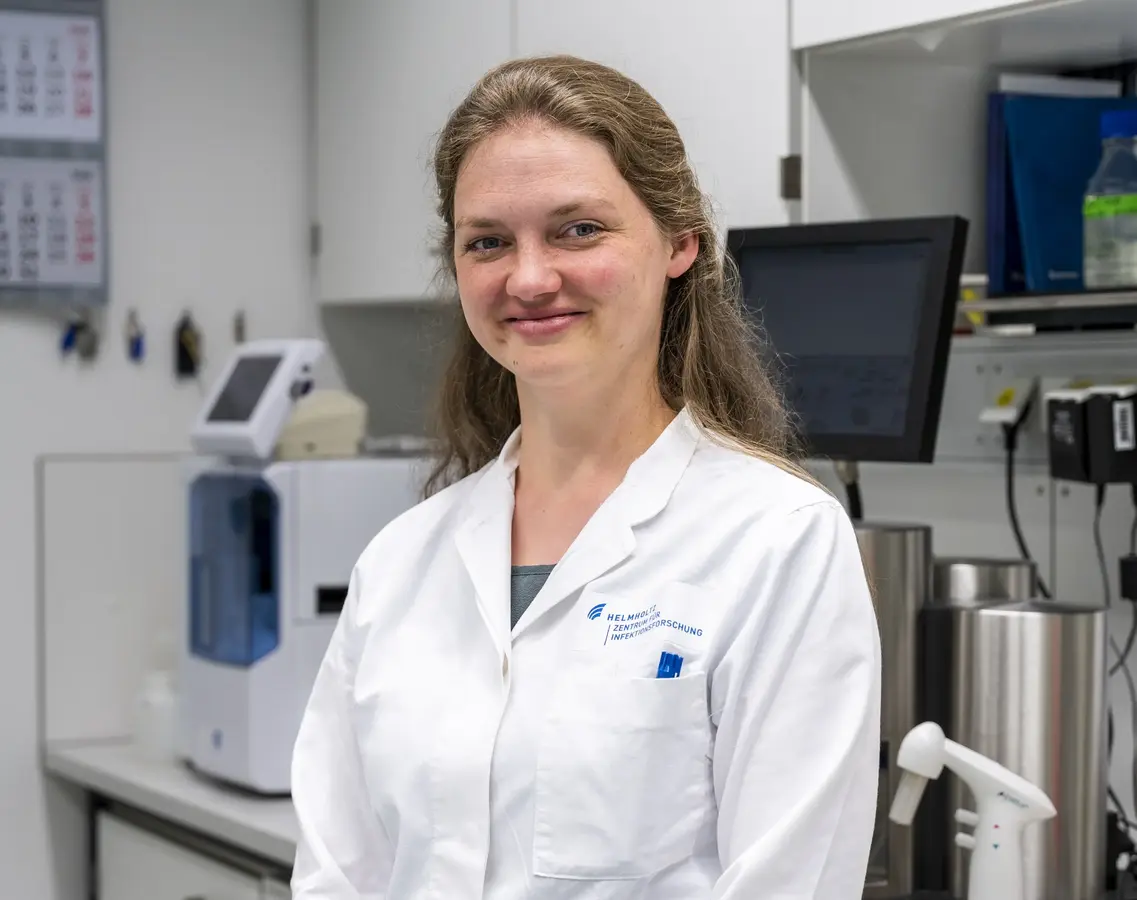
Dr Maren Schubert, Helmholtz Centre for Infection Research, Braunschweig

WHAT EXACTLY ARE ‘VIRUS-LIKE PARTICLES’?

Science Talk on 27 August 2026

How can we effectively combat dangerous viruses without exposing ourselves to the risk of infection? Modern biology’s answer lies in a fascinating technological trick: we recreate the outer shell of viruses in the laboratory down to the last detail, but simply leave out the dangerous genetic material inside. These artificial structures are called virus-like particles (VLPs). They perfectly mimic the real pathogens, but are completely non-toxic and cannot infect anyone. 

At the next Science Talk on 27 August at phaeno, the renowned biotechnologist Dr Maren Schubert will explain how these tiny tools are set to revolutionise infection research in the future.

UNRAVELLING THE BIOLOGICAL MYSTERY OF VIRUS DECOYS.

Imagine a highly precise biological jigsaw puzzle: scientists use special biological blueprints (known as plasmids) in insect cells to assemble the outer protein components of a virus in a controlled manner. 

The result is a perfect, yet completely empty, ‘dummy virus’. As these artificial shells pose no risk of infection whatsoever, the technology removes a major barrier: pathogens can be researched entirely without the strict requirements and restrictions of high-security laboratories. This enables new medicines and active substances to be tested for efficacy at breakneck speed and in huge quantities simultaneously.
 

A SMART DEFENCE SYSTEM FOR OUR HEALTH.

The applications of these safe viral mimics extend far beyond basic research alone. They are already being used successfully as the basis for modern, authorised vaccines (such as those protecting against carcinogenic HPV viruses) and help to track the spread of infectious diseases with precision.

But the research goes even further: Dr Maren Schubert and her team are working on transforming VLPs into smart transporters. Through precise modifications, they aim to enable these VLPs to transport active substances directly into infected cells for targeted treatment in the future. 

The ultimate goal behind all these advances is a biological early-warning and defence system that offers us genuine resilience and protection against future health crises.

EXPERIENCE SCIENCE FIRST-HAND AND HELP SHAPE IT.

Would you like to delve deeper into the future of infection research and understand how biotechnology is revolutionising global public health? At the Science Talk at phaeno, highly complex science won’t remain abstract, but will be presented in a way that’s understandable and accessible to you. 

Take this opportunity to look beyond the traditional lecture format: questions from the audience are expressly encouraged, and you can put them directly to the expert or find out more during an informal discussion afterwards. 

The Science Talk is organised in partnership with the Volkswagen Group and will be held in a hybrid format – both in person and as a live YouTube stream – to make it accessible to a wider audience outside the region.
 

Thursday, 30 July 2026

  • at 6.30 pm, doors open at 6.15 pm

  • at the phaeno Science Theatre 
     

Admission is free. No registration is required. 


Dr Maren Schubert.

Dr Maren Schubert (née Bleckmann) is a passionate biotechnologist. She completed her degree at the Technical University of Braunschweig, followed by her doctoral thesis at the renowned Helmholtz Centre for Infection Research (HZI). Even back then, she specialised in artificially replicating biological building blocks in the laboratory. In doing so, she invented a completely new method using insect cells and developed rapid laboratory tests to assess medicinal compounds at breakneck speed.

After a stint as a laboratory manager in Würzburg, she returned to the Technical University of Braunschweig in 2018. When the COVID-19 pandemic struck the world, she was at the forefront of research: she played a key role in the development of effective COVID-19 drugs (specific antibodies such as COR101) and laid the foundations for research into empty viral shells.

Since September 2025, she has been leading her own research group (the ‘HUMAN’ early-career group) at the HZI in Braunschweig. Here, she and her team work daily to use these artificial viral shells as a protective shield against the health crises of tomorrow.