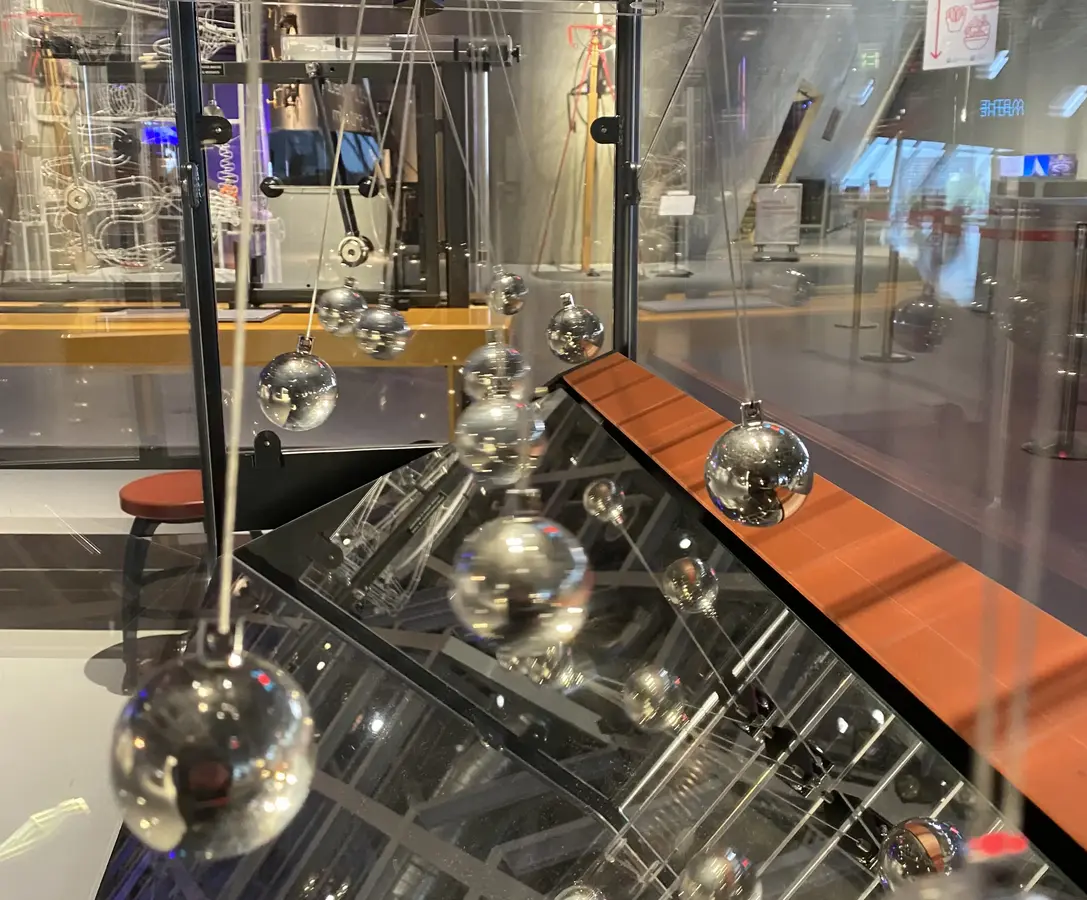
Fancy experimenting with waves?
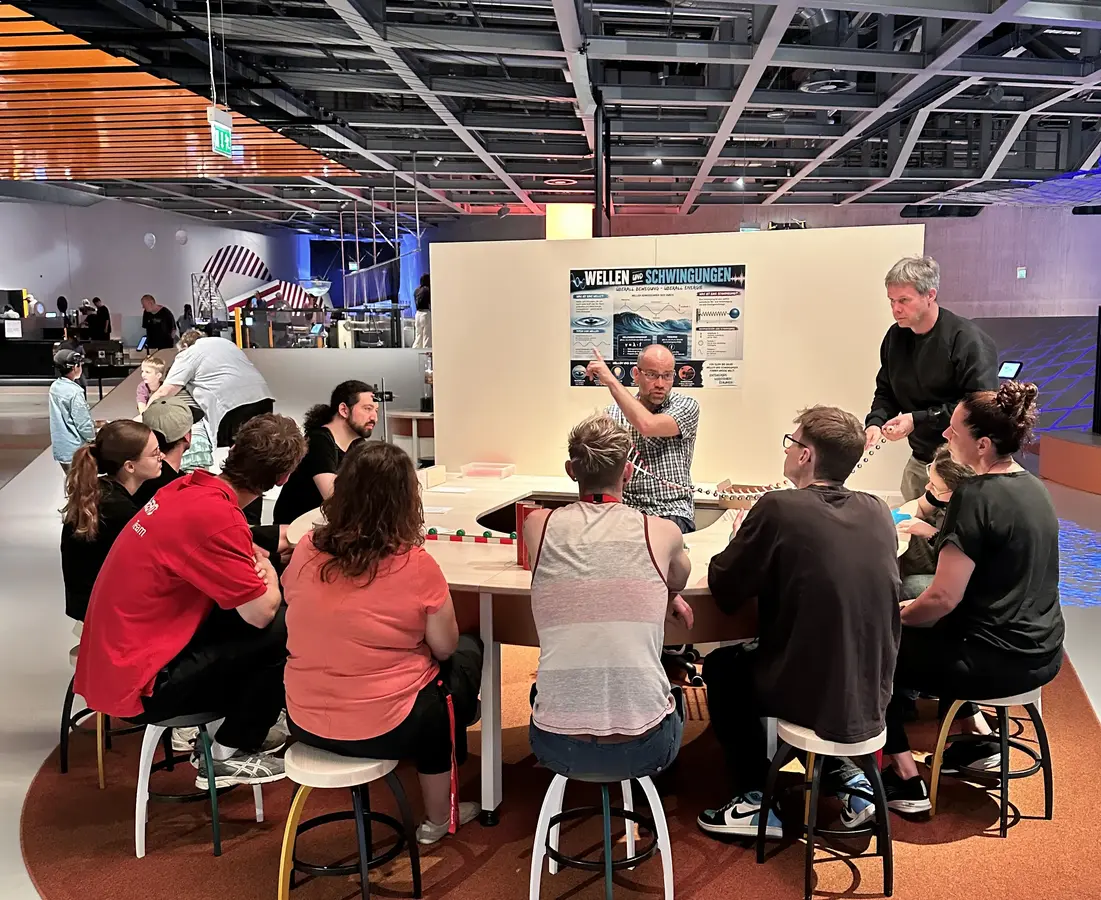
The phaeno staff are currently busy practising at the new hands-on table for visitors to the exhibition – and I’m right in the thick of it. At the table, they’re trying out Slinkys, which twist and turn like snakes or gently transmit pressure waves like a soft car spring. Strictly speaking, Slinkys are nothing more than elegantly shaped springs – and yet they enable astonishingly vivid experiments on the subject of waves. Next to the Slinkys is the well-known tin can telephone, and beside that a somewhat nostalgic-looking wooden resonator box that acts as an amplifier for mobile phones.
Driven by curiosity
Here I meet the curators Dominik Essing and Davy Champion, who, together with many colleagues, are testing the new experiments. It quickly becomes clear what drives everyone as they try things out: it’s curiosity. The experiments are playful, surprising and often simply enchantingly beautiful. It’s only after trying things out several times that questions arise – and anyone who can’t work out the answer for themselves is patiently given little tips, tricks and hints to help them carry on.
Wave Wonders – the exhibits
Having thoroughly explored this new attraction at phaeno, I head off with Dominik to the ‘Waves of Wonder’ exhibition, which features many large – and indeed very large – exhibits on the theme of waves and vibrations. As soon as I walk in, I’m drawn to a deep-blue aquarium where, with a bit of effort, waves are created, crash into one another and break. You can try out for yourself exactly how these waves are created, whilst thinking back to your last day at the seaside.

Making acoustic vibrations visible
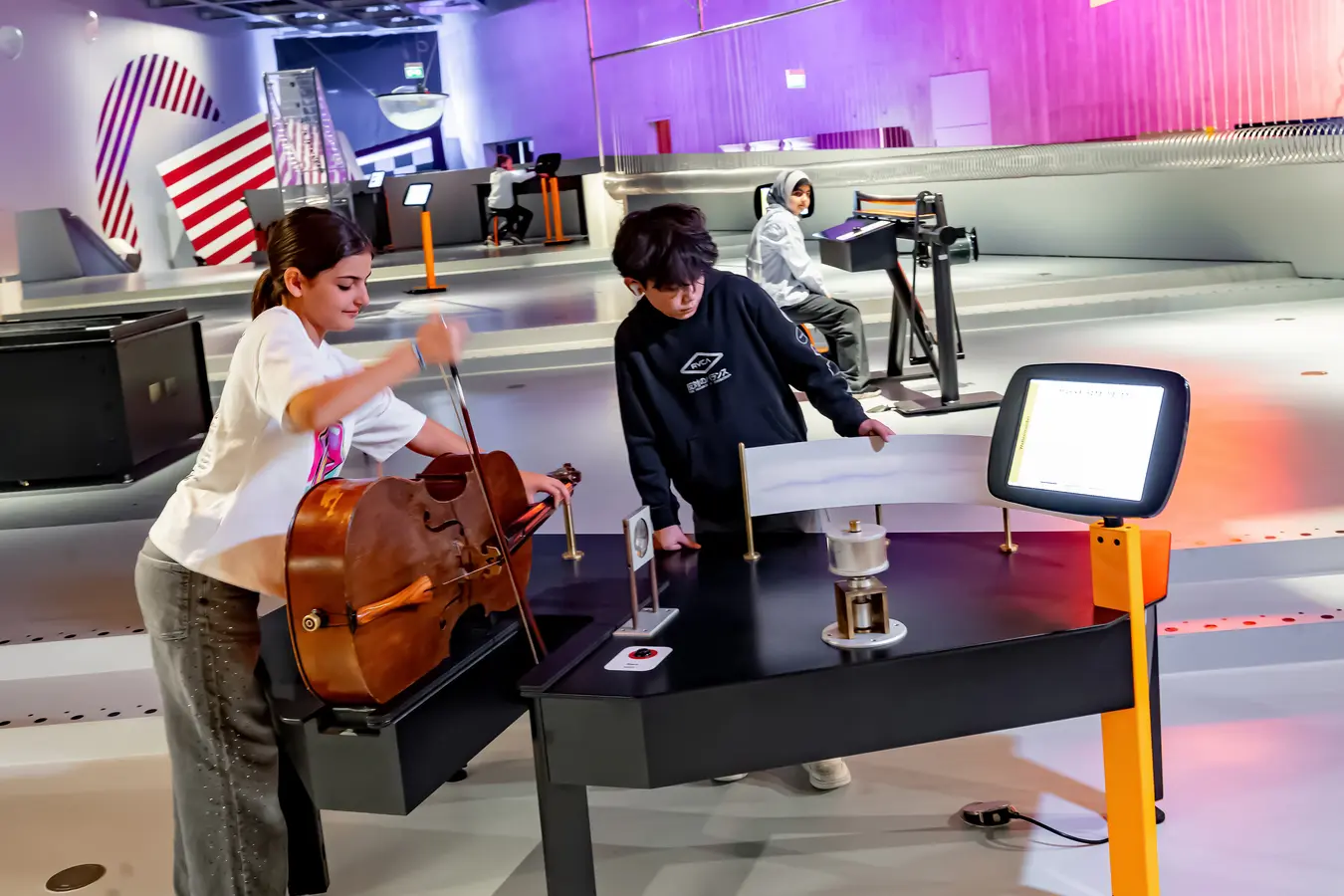
But there is much more to discover. In the middle of the room stands a cello. You can pluck or bow the strings – and their vibrations are made visible with the help of light and mirrors. When plucked, a sine wave with smooth peaks and troughs is produced. When you bow it, on the other hand, a jagged line appears – a so-called triangular wave. Sometimes the sound is harmonious and sometimes it’s buzzing, and you can see this reflected in the visual display too.
The Fascination of the Pendulum Wave
We are particularly fascinated by the pendulum wave: sometimes a chaotic jumble, sometimes in perfect harmony. Hovering above all these wave wonders is a large, orange sine wave that draws visitors in from afar. It’s not just an eye-catcher – it invites you to ask questions: What happens to the wave when I change the frequency using the dial? Or the amplitude?
After this discovery tour with the curator, I still have more questions. So I take the opportunity to have a short interview with Dominik.
INTERVIEW WITH OUR CURATOR
Why is there actually a separate exhibition called ‘Waves: A Wonder’?
If you’re interested in the natural sciences, you can’t avoid the concepts of waves and oscillations. You find them when sounds are produced, when metre-high waves build up, in the mysterious play of light, or even in old grandfather clocks as the pendulum swings.
That’s why it was such a brilliant task to redesign this exhibition. Our everyday lives are full of oscillations and waves. There are lots of everyday connections in this area, and that makes you curious to try out lots of things for yourself.
Please give me one adjective for each of three exhibits that describes it in a single word, and tell us briefly what makes that exhibit so special.

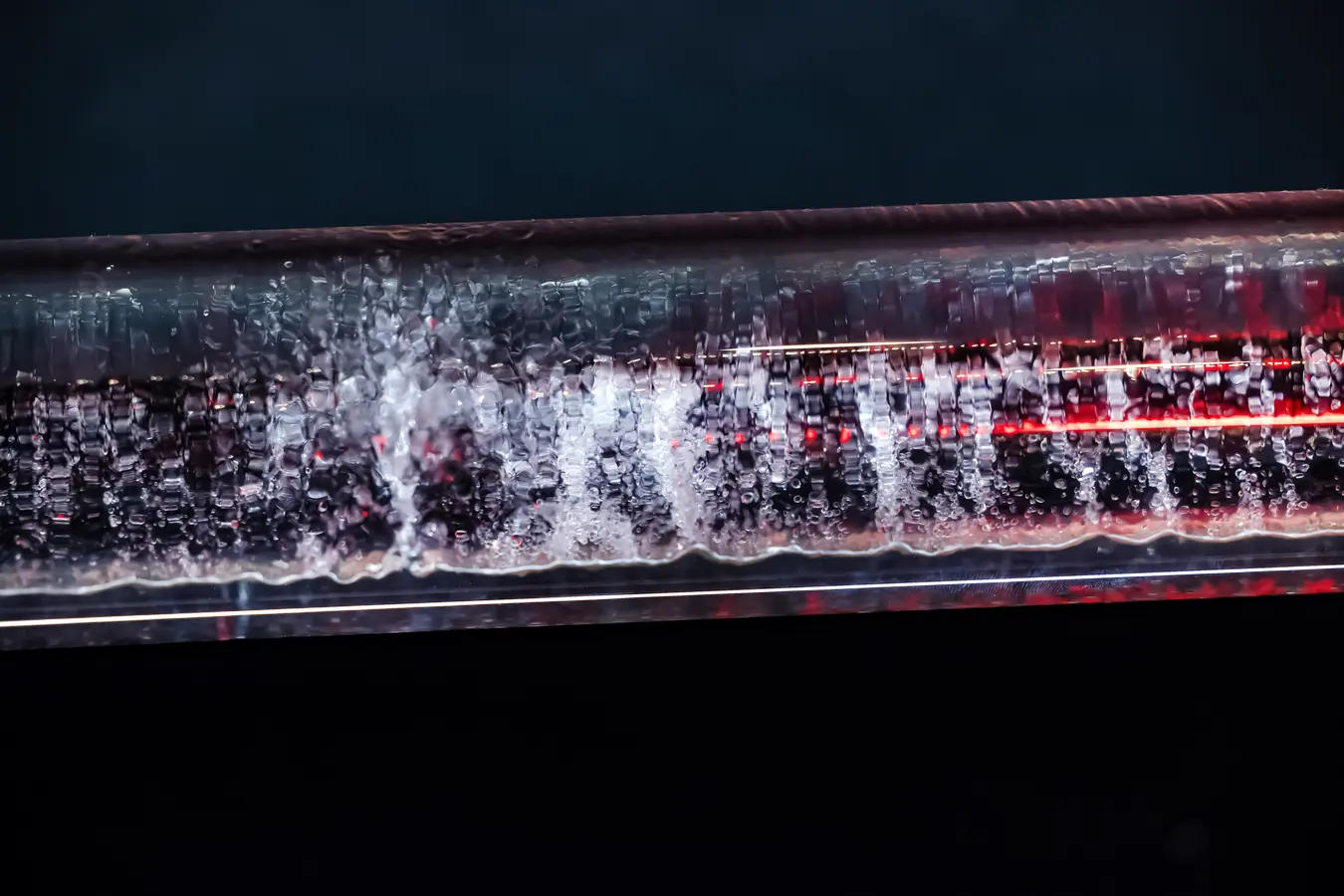
Contradictory (Visible sound waves)
This exhibit seems contradictory: inside the tube, you can sometimes see a liquid spraying up, whilst at the same time a loud noise is heard inside the tube. At certain pitches, resonances occur and surprising spray patterns become visible at regular intervals. Sounds that are almost unbearable and beautiful effects.
Slowing down (flow patterns)
The flow patterns have a calming effect when you place objects and figures in the current. Here, you can relax and let boats drift into the slow-moving current. The water flows around them, and you can observe a wide variety of eddies and flow patterns. These demonstrate just how well the boat glides through the water. If you’re clever, you’ll put this knowledge to use straight away to gain an even better understanding of your own sailing boat, which you can build in the current woodwork workshop.

Unexpected (oscillating wave)
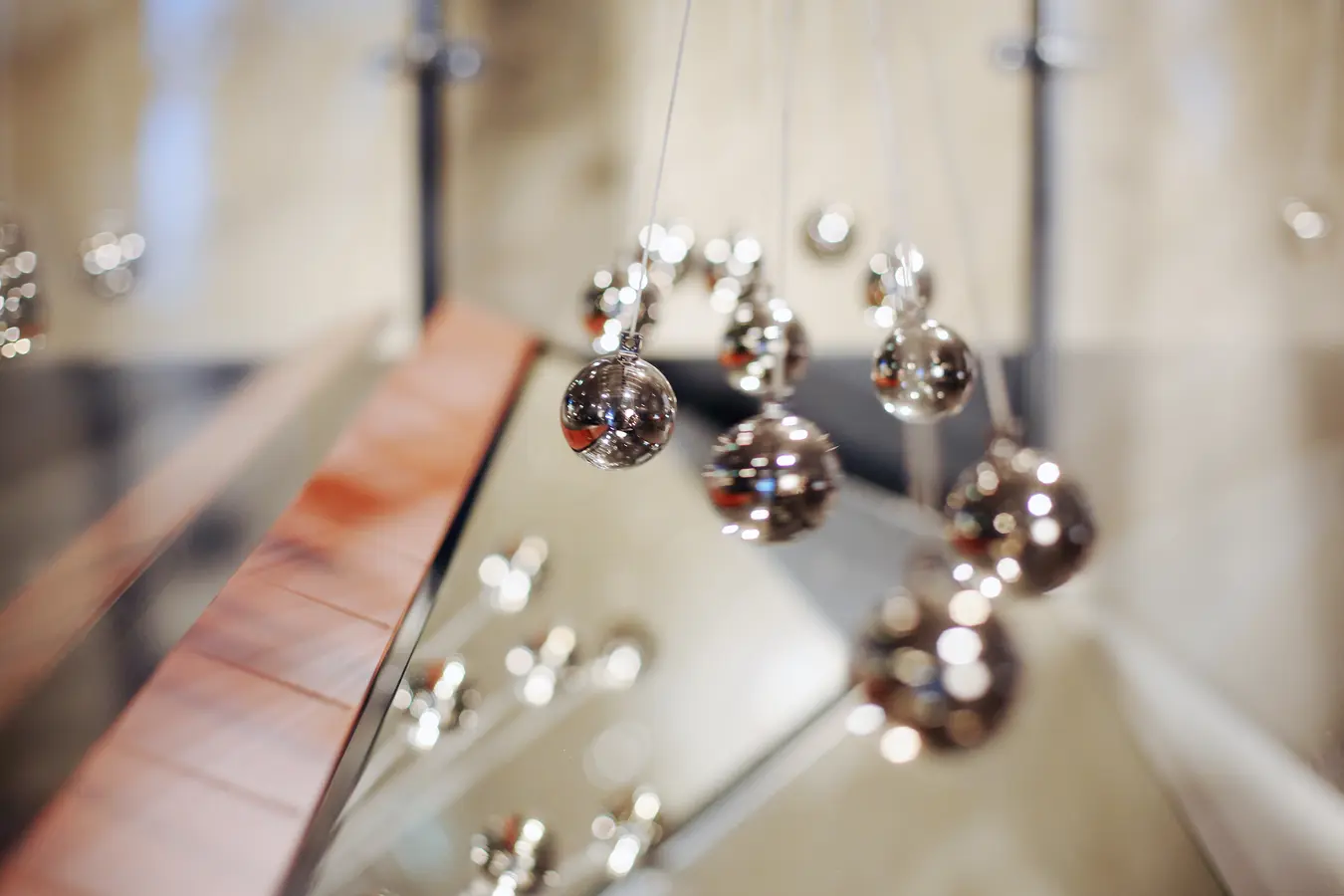
The behaviour of the pendulum wave is unexpected. How on earth can it be that the pendulums swing in perfect harmony one moment, only to seem to descend into chaos the next? The longer pendulums swing reverently slowly, whilst the shorter ones swing much faster. When they are released at the same time, after a while there is an unexpected and brief moment in which they all swing in unison again.
Thank you very much, Dominik. I’m certainly thrilled with the new exhibition area. It’ll be the centre of attention during the summer holidays. Our online competition is also all about the ‘Waves of Wonder’ exhibition.
INFO: The experiment table and the ‘Waves of Wonder’ exhibition are included in the day ticket and can be enjoyed daily until 12 August. The experiment table is open daily at specific times. So head over there and marvel at the wonders of waves! Have fun!
Author: Andrea Behrens