


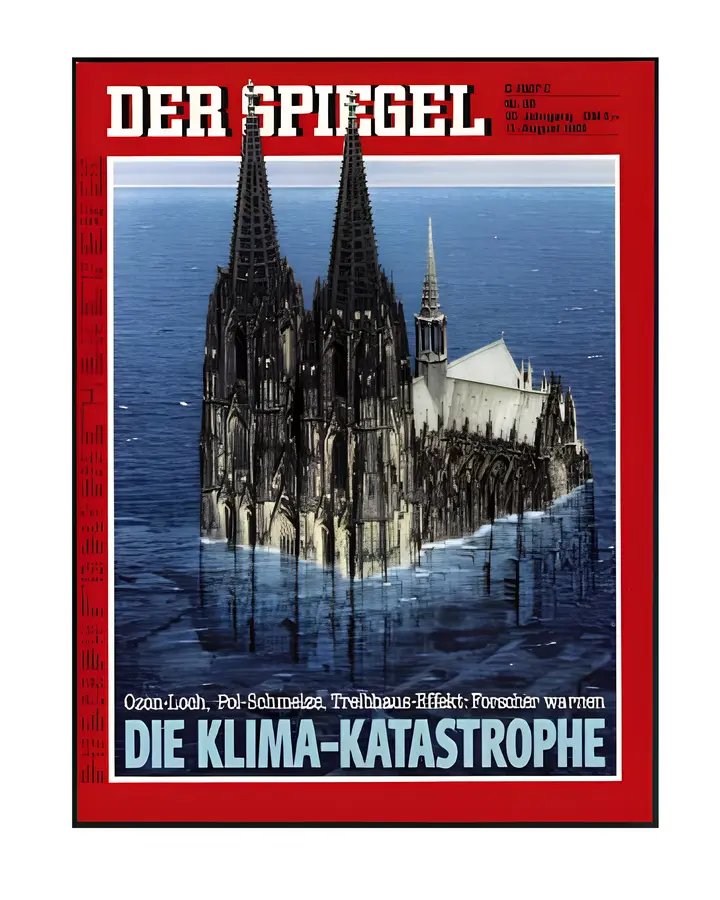
A cover that made history.
The 1986 headline was both grim and dramatic: it painted a picture of the year 2040 in which New York, Hamburg, London and Cairo would have sunk beneath the sea. Not all of the predictions made back then have come true in the way the editorial team feared. Cologne Cathedral is still standing on dry land.
But the crux of the warning was correct: humans are altering the climate, and the consequences have long been felt. The average sea temperature is rising, glaciers and polar ice caps are melting, and extreme weather is on the increase. What began as a headline has become one of the central issues of our time.
It is precisely this historical shift – from the first major media alarm to today’s climate reality – that forms part of our timeline in the Planet A exhibition. There, the original 1986 headline hangs alongside other milestones in climate research and policy.
Reaction & Effect.
In its cover story, *Der SPIEGEL* took up a memorandum from the German Physical Society that warned of the consequences of the greenhouse effect and embellished it considerably for journalistic effect. Once the magazine had stirred public opinion with this, politicians reacted swiftly: In 1987, the Bundestag set up a commission of inquiry, and as early as 1990, the then Kohl government announced its groundbreaking target of reducing CO₂ emissions by 25 per cent by 2005. The cover is thus regarded as the journalistic spark that ignited a political debate on climate change, which until then had mainly been confined to specialist circles.
Public reactions were mixed: for some, the cover was a necessary wake-up call that made an abstract scientific topic accessible to a wider audience for the first time. For others, it was, from the outset, too sensationalist and fear-mongering. The image of Cologne Cathedral submerged in water continues to this day to provoke critics who accuse the magazine of exaggeration. In fact, some of the detailed predictions made at the time have not come to pass: since 1986, sea levels have risen by an average of just over three millimetres per year, totalling around ten centimetres – significantly less than the dramatic imagery on the cover suggested. Climate researchers such as the meteorologist Hartmut Graßl therefore still view the cover in two ways: as an important wake-up call, albeit one that was also greatly exaggerated in its visual language.
This ambivalence makes the SPIEGEL front-page headline an interesting case study to this day – not only about climate change itself, but also about how science, the media and politics interact when a complex issue suddenly becomes a topic of mass interest. Just how justified the underlying concern was is evident from the fact that what began as a brief side note in 1986 has now become a key global political issue, shaping international climate agreements, national legislation and our everyday lives in equal measure.
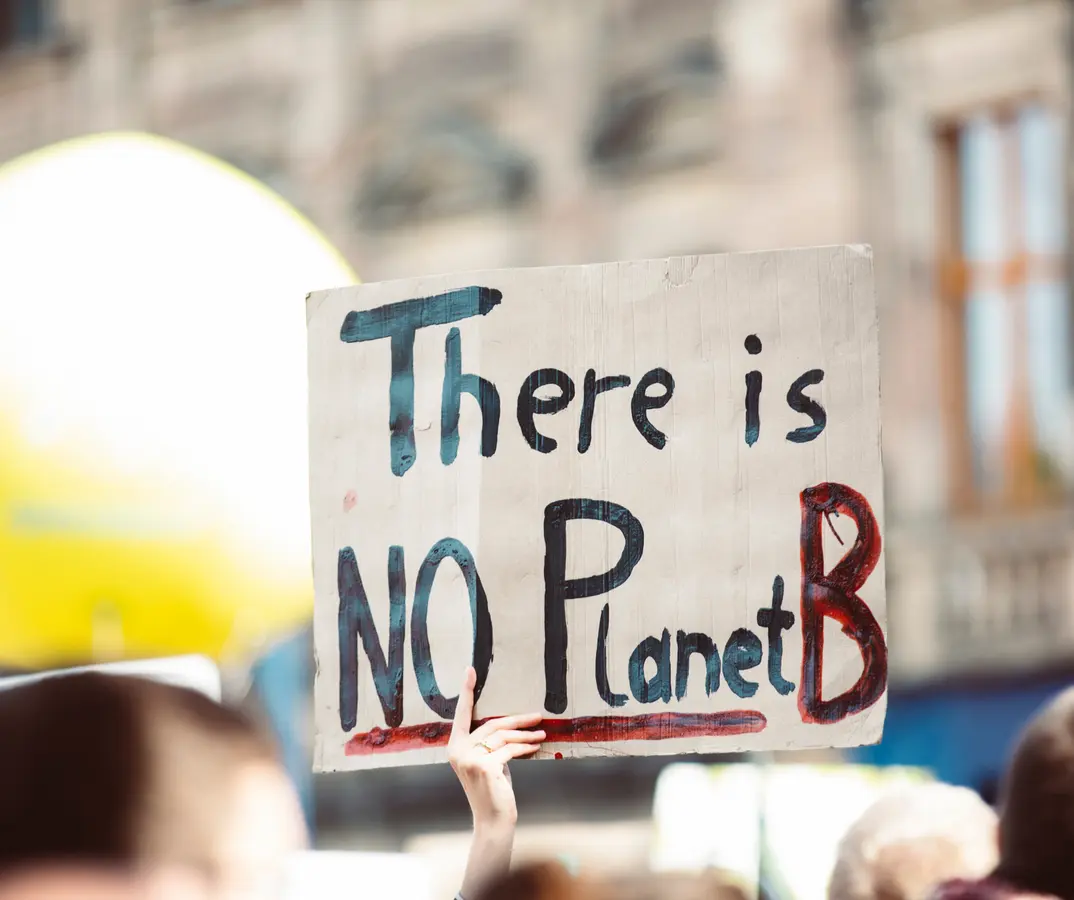
Planet A: Hands-on climate science.
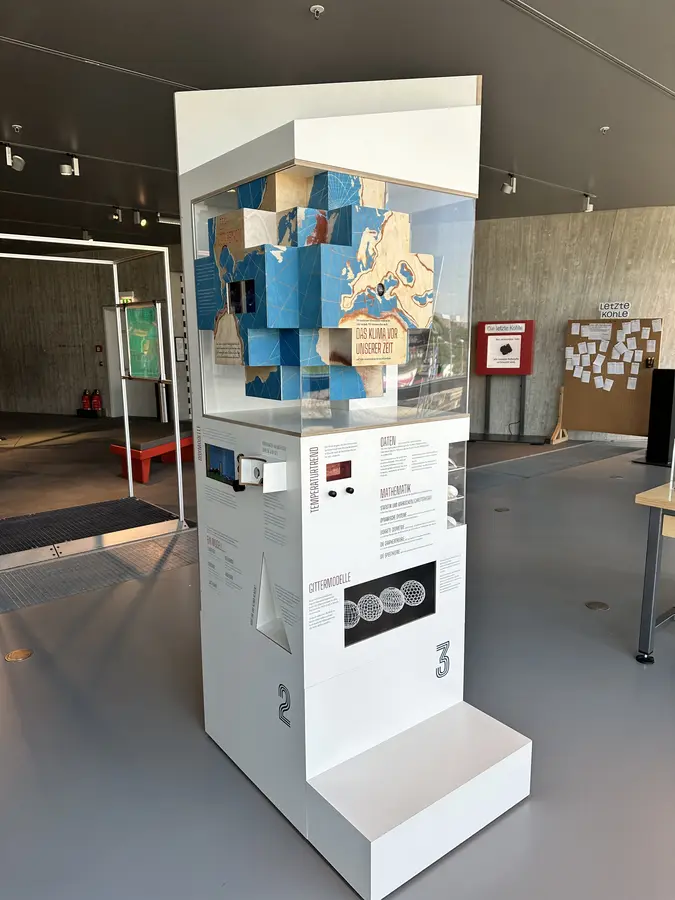
What *Der SPIEGEL* proclaimed in large letters back in 1986 can now be experienced first-hand at phaeno. In the PLANET A exhibition, abstract technical terms such as the greenhouse effect, CO₂ concentration and tipping point are transformed into interactive exhibits that visitors can try out, measure and explore. Instead of simply reading about how much CO₂ warms the Earth, visitors can measure for themselves how effectively the greenhouse gas absorbs thermal radiation and experience first-hand how the theory behind a newspaper headline becomes tangible scientific practice.
It is precisely this step from warning to realisation that the following stations illustrate:
- 10-Minute Museum – a concise introduction that sums up the key facts about the climate crisis.
- Timeline – featuring the historic SPIEGEL cover from 1986. How has our understanding of climate change evolved since then?
- ‘Greenhouse Effect’ exhibit – the physical mechanism behind global warming, explained clearly.
- ‘CO₂ Budget’ exhibit – how much carbon dioxide can humanity still emit to limit global warming? And what does that mean for everyday life?
ESD: From a marginal topic to a teaching principle.
A great deal has also happened in the field of education since 1986 – climate and sustainability education now have a firm place in German schools. The term ‘Education for Sustainable Development’ (ESD) was coined at the 1992 UN Conference on Environment and Development in Rio de Janeiro, whose final document assigned education the task of empowering people to play an active and responsible role in shaping our globalised world. The topic received a significant boost from the United Nations’ “Decade of Education for Sustainable Development”, proclaimed for the years 2005 to 2014.
In Germany, this led to its systematic integration into the school system: based on the recommendation of the Standing Conference of the Ministers of Education and Cultural Affairs and the German Commission for UNESCO on ‘Education for Sustainable Development in Schools’ of June 2007, ESD was systematically established in general education schools – through the updating of guidelines and curricula, as well as through school development and the in-service training of teachers. Since then, the recommendation has been further developed on several occasions: in 2017, the National ESD Platform adopted the National Action Plan for the implementation of the UNESCO Global Action Programme on Education for Sustainable Development (2015–2019). Most recently, in 2024, the Standing Conference of the Ministers of Education and Cultural Affairs adopted a revised recommendation that aligns ESD with the goals of the United Nations’ 2030 Agenda and integrates the 17 global Sustainable Development Goals into everyday education.
What began as a moment of shock in 1986 has thus, over the decades, evolved into a firmly established educational principle that is now embedded across all subjects in curricula, school profiles and teacher training. This is precisely where phaeno’s school programmes come in: They translate the concept of ESD into concrete, action-oriented formats – from simulation games to climate labs – and pick up where the climate debate began in 1986: with the question of what individuals, but also society as a whole, can actually do.
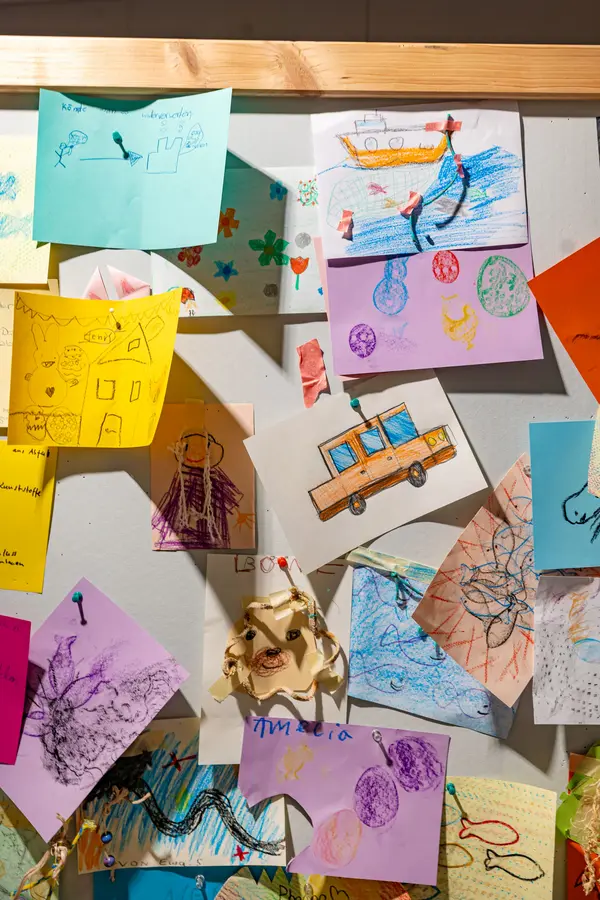
Offers for schools.
Anyone wishing to explore the subject in greater depth will find a comprehensive educational programme at the Science Centre:
- Simulation game ‘Mission W.’ (also suitable for adults as a team event, 1 September to 2 October 2026: participants take on different roles and negotiate climate policy and the energy transition.
- There’s energy in that. Setting things in motion (Year 1, from January 2027): an introduction to the topic of energy for the youngest children.
- Energy from Wind and Sun (Years 3–6, until January 2027): exploring renewable energy through hands-on activities.
- Energy: The Master of Transformation (Years 7–8, until January 2027): understanding energy conversion and trying it out for yourself.
- Climate Lab ‘Tracking Global Warming’ (Years 7–10, until January 2027): inquiry-based learning about the causes and consequences of global warming.
- Climate Lab (Researching CO₂): Experiments focusing on the greenhouse gas that has become a symbol of the climate crisis since 1986.
For teaching staff, there is also the two-day digiMINT training course, which combines digital and science education.

The last bit of cash.
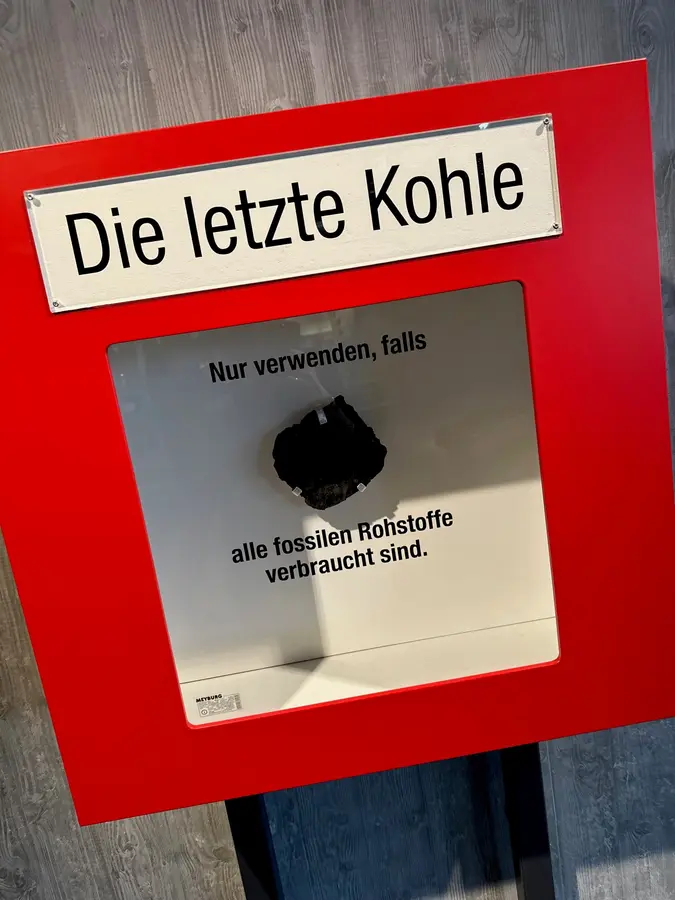
Visitors of all ages are also exploring the theme in the forum (currently the KUNSTSTOFFFORUM). Here you’ll find the art installation ‘The Last Piece of Coal’ and the auction, which addresses the transition away from fossil fuels in a way that is both entertaining and thought-provoking.
Anyone wishing to enhance their experience of the exhibition can take part in discovery tours on the theme of climate and explore the content of PLANET A in greater depth.
Press invitation.
To mark the 40th anniversary of the SPIEGEL cover, phaeno is inviting members of the media to come and see Planet A for themselves – from the historical timeline and interactive exhibits to the educational programmes for schools and adults.
If you have any queries or would like to arrange an appointment, please contact Andrea Behrens 👉 kommunikation@phaeno.de

On the 1986 SPIEGEL cover story and its aftermath:
Climate Reporter: “When Cologne Cathedral was under water” –https://klimareporter.de/gesellschaft/als-der-koelner-dom-unter-wasser-stand (Analysis by meteorologist Hartmut Graßl, 1987 Enquete Commission, 1990 CO₂ target, sea level facts)
KIT Library Catalogue: Interim report by the Enquete Commission ‘Precautionary Measures for the Protection of the Earth’s Atmosphere’ – https://katalog.bibliothek.kit.edu/bib/62094 (official document of the Bundestag Commission)
Klimafakten.de: Cologne Cathedral and the Grand Arch of Paris: How the ‘media climate’ has changed | klimafakten.de
On the development of ESD:
Conference of Ministers of Education and Cultural Affairs (KMK): ‘Education for Sustainable Development’ topic page – https://www.kmk.org/themen/allgemeinbildende-schulen/weitere-unterrichtsinhalte-und-themen/bildung-fuer-nachhaltige-entwicklung.html (History 2007/2015/2024, Framework for Guidance)
KMK press release: “Conference of Ministers of Education publishes new recommendation on ESD in schools” – https://www.kmk.org/aktuelles/article-view/conference-of-ministers-of-education-publishes-new-recommendation-on-education-for-sustainable-development-in-schools.html (Resolution of 13 June 2024)
Global Learning Portal: “KMK recommendation on ESD in schools” – https://www.globaleslernen.de/de/beschluesse/empfehlung-der-kultusministerkonferenz-zur-bildung-fuer-nachhaltige-entwicklung-der-schule (Details on Agenda 2030 / SDG integration)
KMK Press Archive 2007: ‘Education for Sustainable Development in Schools’ – https://www.kmk.org/presse/pressearchiv/mitteilung/bildung-fuer-nachhaltige-entwicklung-in-der-schule.html (in relation to the UN Decade of Education for Sustainable Development 2005–2014)