forum

Understanding plastics

Plastic is one of the most versatile materials of our time and, at the same time, one of the greatest challenges for the environment and society. In the forum, you will learn why plastic shapes our modern lives, what opportunities it offers and how we can use it responsibly.

Plastics Forum.

What makes plastic so versatile?
How does it shape our lives – and how can we shape its future?

Plastic is more than just a material – it can become a solution, a resource and a driver for sustainable innovation.

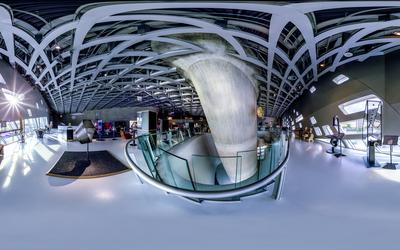
The forum, the future lab and the Planet A exhibition show how science, the circular economy and responsibility belong together – in an interactive, understandable and future-oriented way.

Together, they form an experiential space at phaeno that informs, inspires and encourages children, young people and adults to think for themselves.

Plastics Forum

Plastic is generally considered unsustainable and bad for the environment. But plastic is also indispensable in many areas of our lives. This is precisely the subject of a new exhibition at phaeno in Wolfsburg. It officially opened on 4 March.

SAT1 report

Ghost nets.

Every year, hundreds of thousands of tonnes of old or lost nets end up in the oceans. Known as "ghost nets", they drift through the water, trapping marine animals and contributing significantly to ocean pollution.

In the forum, we show you original fishing nets – and with them three stages of the same material:

  • A new net: robust, tear-resistant and designed for extreme loads.
  • A heavily used net: no longer repairable, but still virtually indestructible.
  • And finally, microplastics: tiny plastic particles that are created by decomposition and remain permanently dispersed in the water.

Plastic's particular durability makes it technically valuable – but it becomes an ecological problem when products do not remain in the cycle at the end of their useful life. Plastic fishing nets take 400 to 600 years to decompose completely. They do not disappear, but break down into ever smaller fragments.

Only when materials are returned to recycling cycles after use can durable materials avoid becoming permanent environmental problems.

REVFIN – Circular economy in action.

One example from science and practice is the REVFIN project, which was led by Ostfalia University of Applied Sciences. For more than three years, an international research team worked on establishing a circular economy for plastic fishing nets and ropes in Vietnam. The project was the starting point for the exhibition shown here.

This exhibition area in the forum is a joint project between Ostfalia University and phaeno, funded by the Volkswagen Foundation.

Hidden layers.

Not all plastics are the same. Many everyday products appear to be made of a single material, but in fact they consist of several layers that are firmly bonded together.

At this station, you can look inside objects and discover what remains invisible from the outside: complex combinations of materials with different functions. It is precisely this diversity that makes modern product design possible – but it also poses major challenges for recycling. The individual layers are so firmly bonded together that they can hardly be separated, if at all, after use. Even if these products are disposed of correctly, they are often not recyclable.

And when you look inside a sneaker, it quickly becomes clear that there is far more material diversity here than you might think at first glance.

Plastic icons.

Some plastic items became more than just objects – they became icons of their time. At this station, you will find objects that have shaped generations. Perhaps you have some of them at home?

Plastic revolutionised how we manufacture and use things. As a malleable, lightweight and versatile material, it opened up completely new possibilities. Things that previously had to be made from wood, metal or glass could suddenly be produced in large quantities – cheaper, more colourful and in more variations.

Each of these objects tells a story of innovation and mass production. What was once considered revolutionary became commonplace. What began as a single item was copied millions of times over.

Our top events

all events
11. Apr — 26. Apr
Mitmachlabor
Plastics laboratory of the future
14. May — 17. May
Mitmachlabor
Plastics laboratory of the future

Our exhibitions

all exhibitions
Quanten Permanent exhibition
Unter Strom Permanent exhibition
Launchpad Permanent exhibition
Math magic Permanent exhibition
Point of view Permanent exhibition