A cover that made history – and continues to have an impact to this day
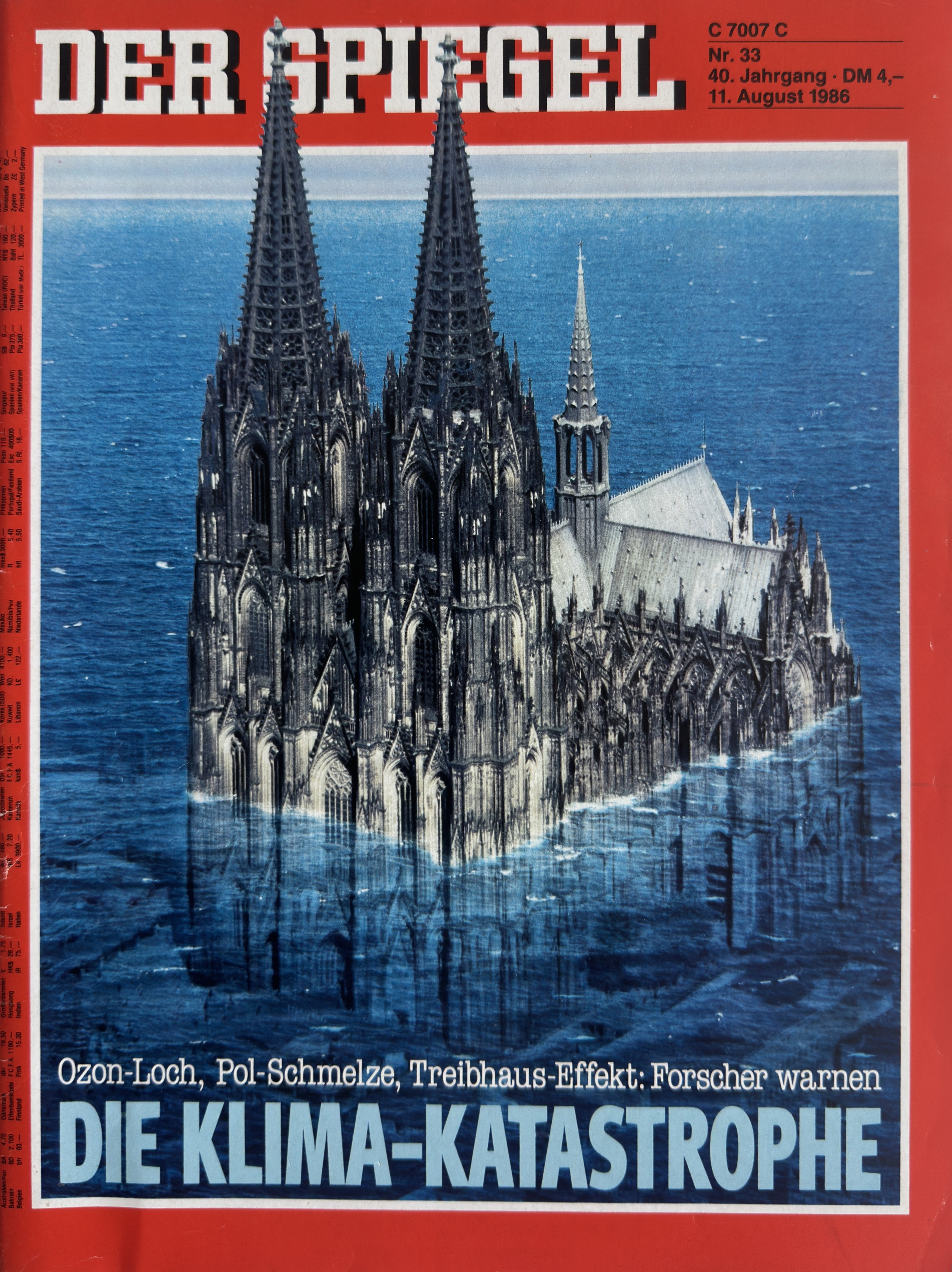
The 1986 issue of *Der SPIEGEL* presented a grim vision: New York, Hamburg, London and Cairo submerged. Cologne Cathedral submerged. A headline that shook people up and continues to have an impact to this day – not as an exact prediction, but as a turning point in the public perception of climate change. It is precisely this historic turning point that now serves as the starting point for the exhibition ‘Planet A’ at phaeno Wolfsburg.
What began in 1986 as a journalistic bombshell had immediate political consequences. Shortly afterwards, the Bundestag set up a commission of inquiry, and the federal government announced ambitious CO₂ targets. An abstract scientific topic had suddenly become the issue of the day – thanks to a magazine cover.
Reactions were mixed. For some, it was a necessary wake-up call; for others, it was too dramatically staged. Meteorologist Hartmut Graßl, for example, acknowledges the cover as an important wake-up call, but criticises the exaggeration in the visual imagery. In fact, sea levels have risen by around ten centimetres since 1986 – significantly less than the dramatic imagery suggested. Yet the core of the warning was, and remains, correct: humans are altering the climate, and the consequences have long been felt. Rising sea temperatures, melting glaciers, extreme weather – these are no longer mere scenarios, but reality.
From the cover to the exhibition: hands-on climate science
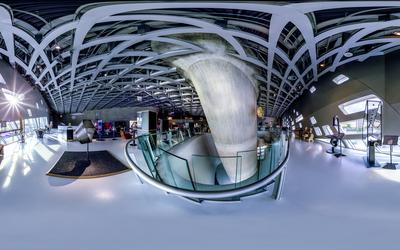
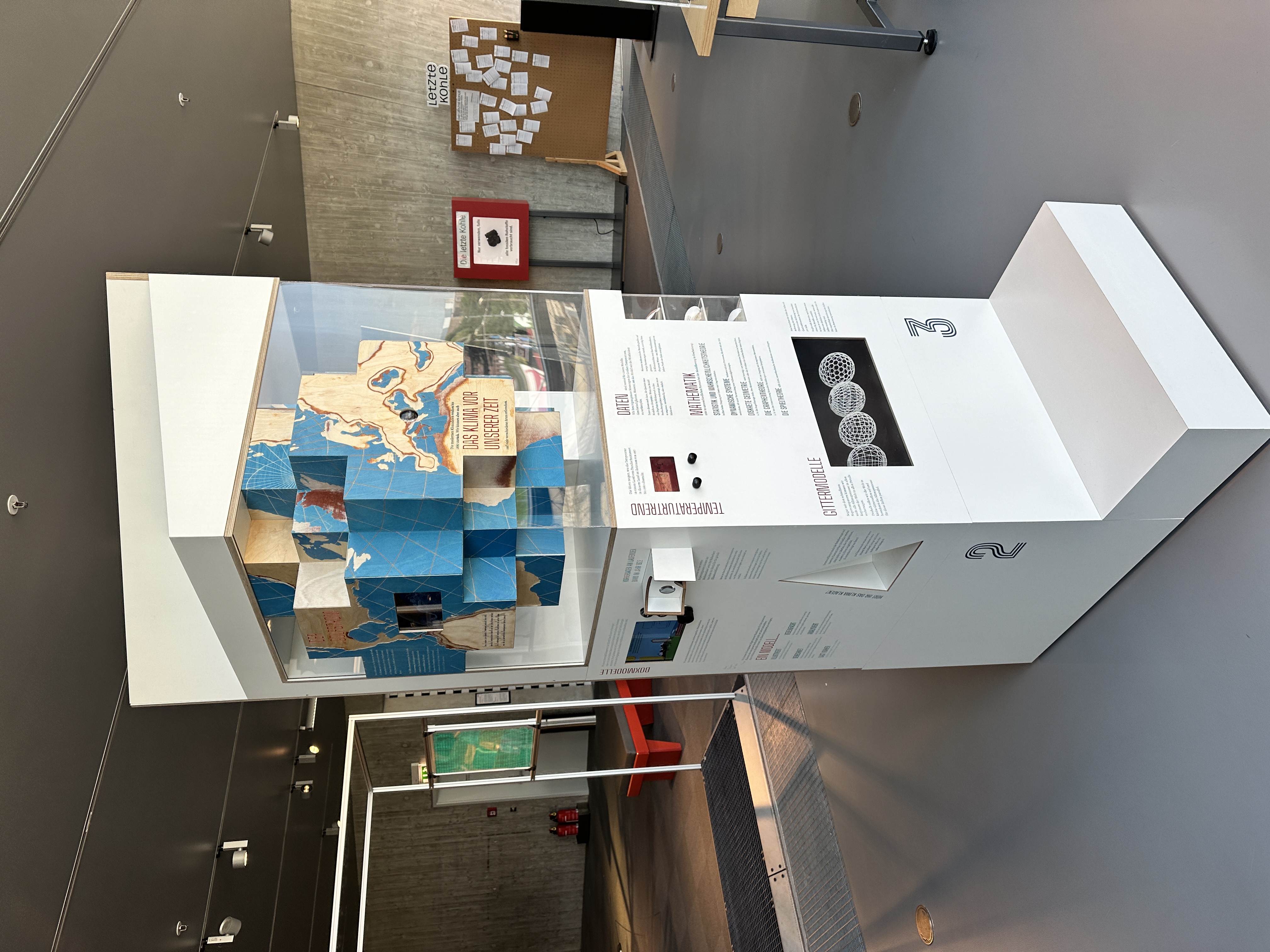
The historic SPIEGEL cover now hangs at phaeno amongst other milestones in climate research and policy – not as a relic, but as a starting point for a journey of discovery. For what *Der SPIEGEL* proclaimed in large letters back in 1986 can now be grasped with your own hands here.
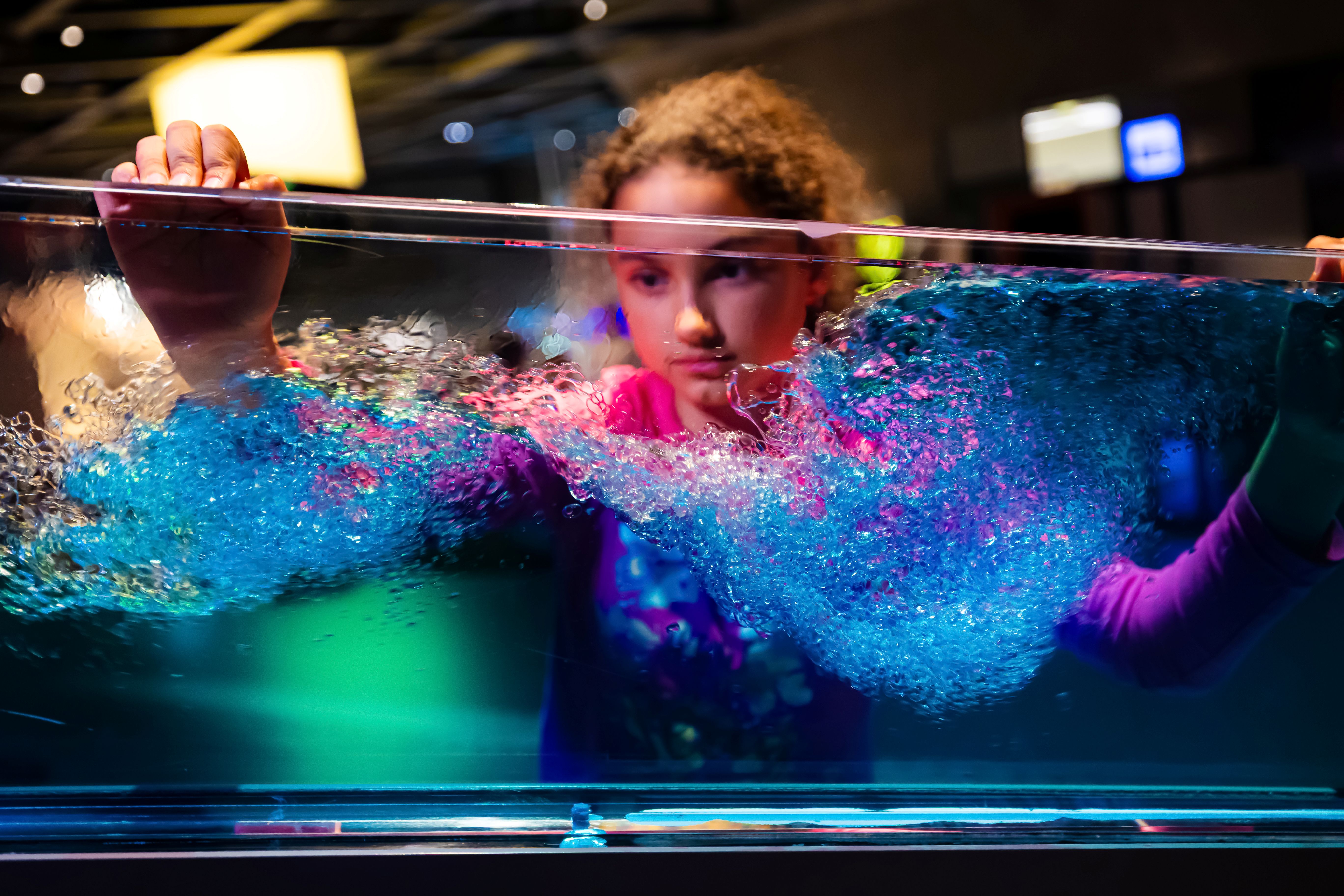
In the Planet A exhibition, dry theory becomes science you can experience: rather than just reading about how much CO₂ warms the Earth, visitors measure for themselves how strongly the greenhouse gas absorbs thermal radiation. Abstract technical terms such as the greenhouse effect, CO₂ concentration or tipping point are transformed into interactive exhibits to try out and explore. “It is precisely this step from warning to personal realisation that our stations illustrate,” explains curator Alexandra Schautz.
Among other things, there is: a ‘phaeno 10-minute museum’ – a compact introduction that sums up the key facts about the climate crisis. The timeline – taking the historic 1986 SPIEGEL cover as its starting point: how has our understanding of climate change developed since then? The ‘Greenhouse Effect’ exhibit – the physical mechanism behind global warming, clearly explained and brought to life. Last but not least, the ‘CO₂ Budget’ exhibit – how much carbon dioxide can humanity still emit? And what does that mean for our everyday lives?
It is more than just a historical footnote; just how justified the concern was at its core is evident from the fact that what began as a marginal note in 1986 has since become a key global political issue. Planet A at phaeno Wolfsburg invites visitors to trace this very development – and to understand the role each and every one of us can play.